




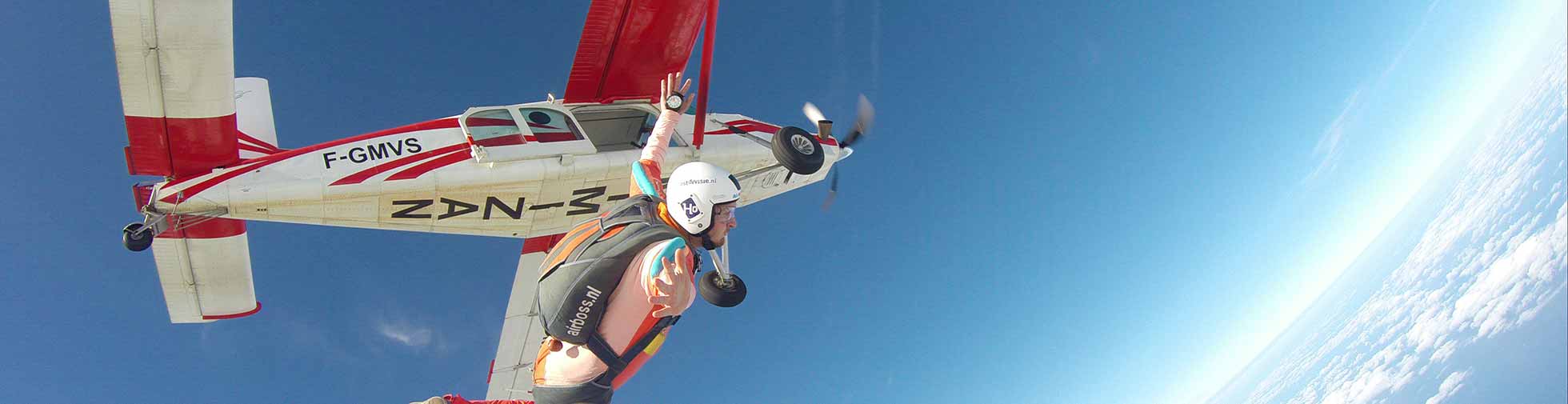
Learn to skydive with Airboss,
your skydiving vacation with training
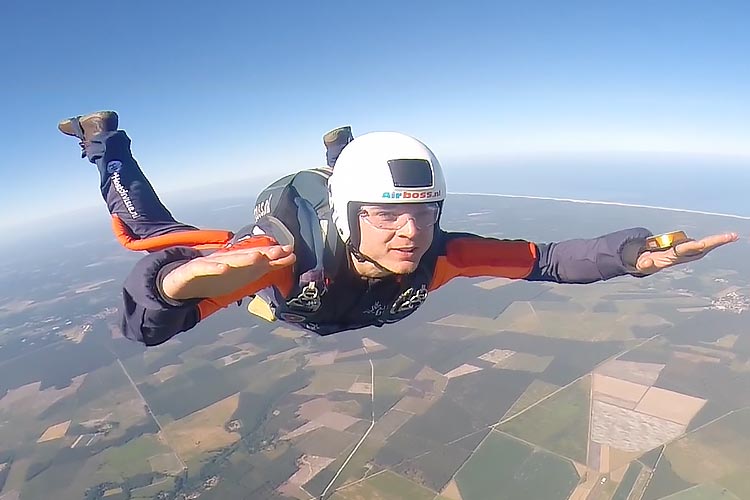
Third freefall during the Airboss parachute course above the Atlantic coast.
Do you want to learn to skydive and are you looking for a parachute course where you actually leave the aircraft yourself right away?
For beginner skydivers in the Netherlands, the Static Line course was popular for years: a jump where your parachute opens immediately via a line attached to the aircraft.
These days almost everyone chooses the modern Accelerated Freefall course (AFF).
You make several freefall jumps of around 55 seconds and learn to skydive independently in a short time.
At Airboss you combine that parachute course with a skydive vacation in France or Morocco.
In one or two weeks you learn more than you would in months of scattered jumps at home, and you do it in a place with sunshine, space and a group of people who share the same goal as you.
Really start skydiving
With this course you are not just trying skydiving once, you are really starting.
No months of waiting between single jumps in the Netherlands, but training in a steady rhythm on location.
You start with a thorough ground school where you learn the key techniques and emergency procedures.
Only when you and your instructors feel you are ready do you step into the aircraft.
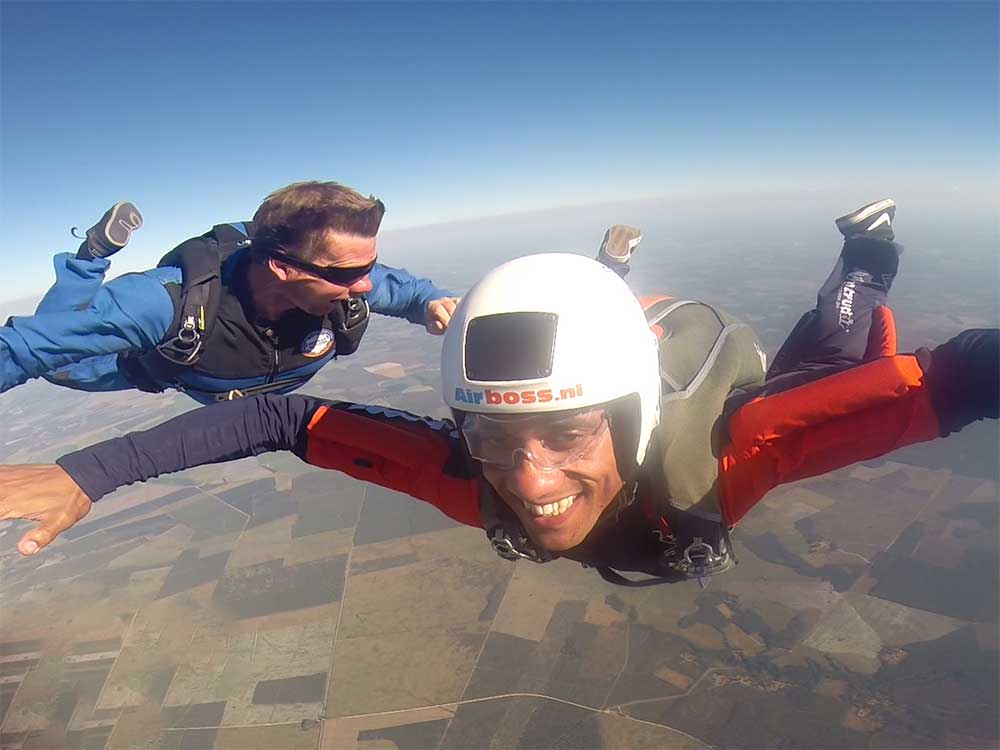
At around four kilometres altitude you make your first freefall jump with two instructors at your side.
During the course you make a total of seven jumps, one of which is a free extra jump.
After your sixth jump you go solo and receive an internationally recognised AFF certificate.
At the moment this is the fastest and safest way to learn to skydive and grow towards becoming a licensed sport skydiver.
Video: this is what an Accelerated Freefall course looks like, from your first jump to your first solo.
Skydiving course with a holiday feeling
In the Netherlands there are several places where you can do a skydiving course.
The downside is that you are often dependent on the weather, weekends and small windows in your calendar.
At Airboss we do it differently.
We run our courses in locations where you can combine skydiving and vacation.
In winter months we jump in Beni Mellal in Morocco, at the foot of the Atlas Mountains.
In summer we are based in Royan in France, a lively seaside town on the Atlantic coast.
You spend a full week in the same place with your group, your instructors and the crew.
During the day you jump, follow theory classes and watch video together.
Around that there is time for the beach, pool, local markets or a day trip.
On the page where can you skydive we explain what the choice between the Netherlands, France and Morocco looks like in practice.
A unique way to learn to skydive
What makes this parachute course special is the mix of learning and living.
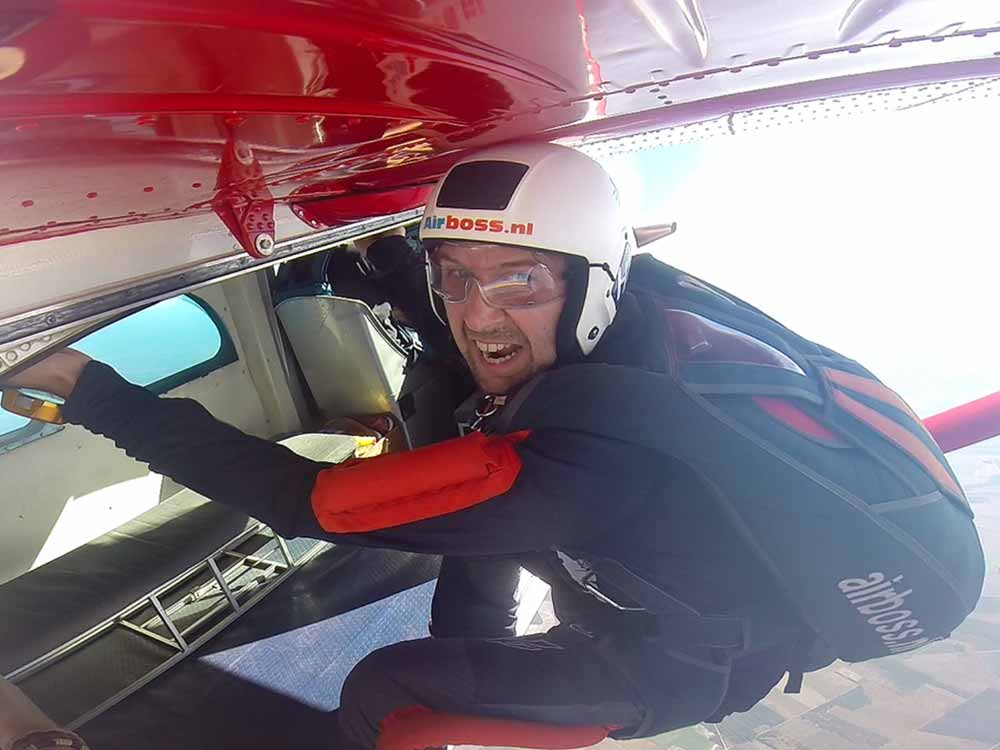
Each jump you feel the tension in the aircraft, the silence right before exit and the freedom of freefall.
Under canopy you have time to really take in the view and the moment.
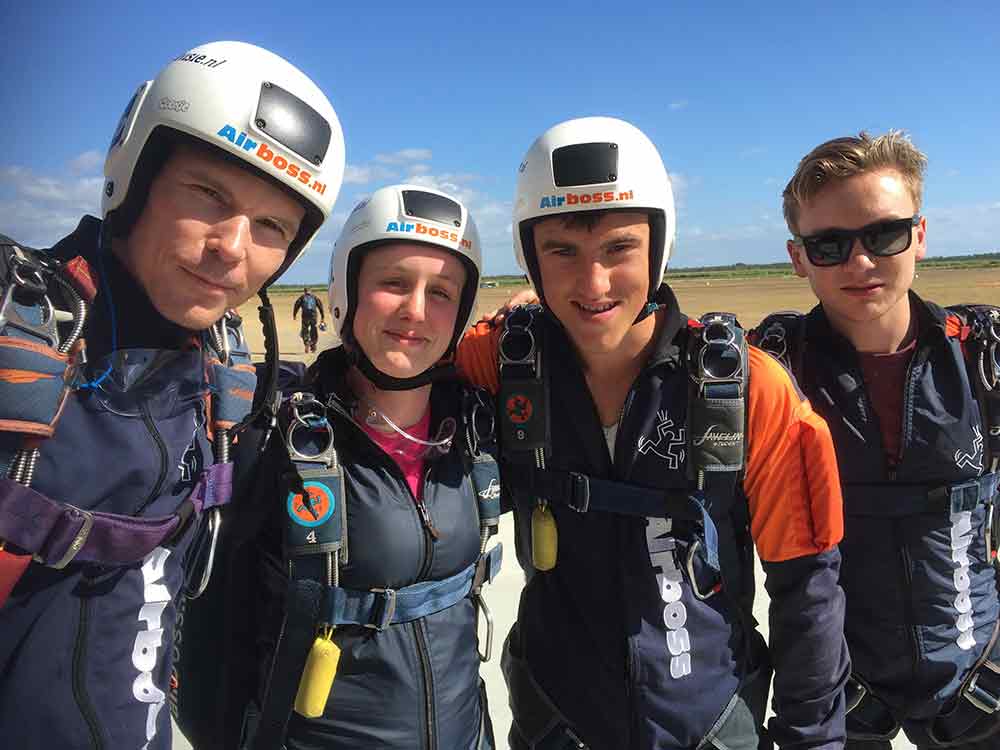
Because you stay on site together with other students, a close group forms quickly.
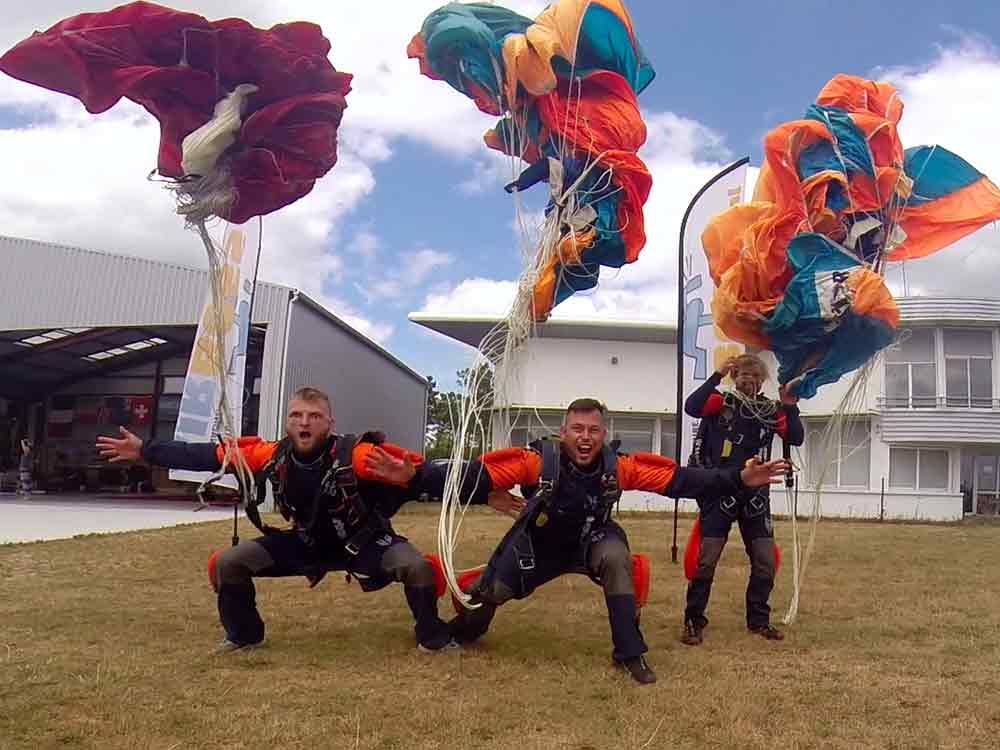
You share successes, small frustrations, fist bumps after landing and stories at the dinner table.
That makes the course not only educational, but also social and something you will look back on with a smile.
Want to read more about learning to skydive?
- ➔ Doubts about skydiving: about nerves, hesitation and still making the jump.
- ➔ How to start skydiving: the step from interest to action.
- ➔ Your first skydive: how your very first jump feels and what makes it so special.
- ➔ How much does skydiving cost?: an explanation of prices, packages and what you get in return.
What is included in the course?
The Airboss parachute course is set up as a complete training package.
You know in advance what to expect and what you will be doing during your week.
Who is this course for?
For adventurous starters with no skydiving experience who want to truly learn to skydive in one week.
You do not need to have jumped before, we teach you step by step.
Course duration
- 7 days on location
- Room for one or more jumps each day
- Daily theory, briefing and video debriefing
What is included
- Theory and practical lessons on the ground
- Radio guidance for flying and landing
- 7 days of personal coaching
- Video debrief after every jump
- 6 AFF jumps with an instructor
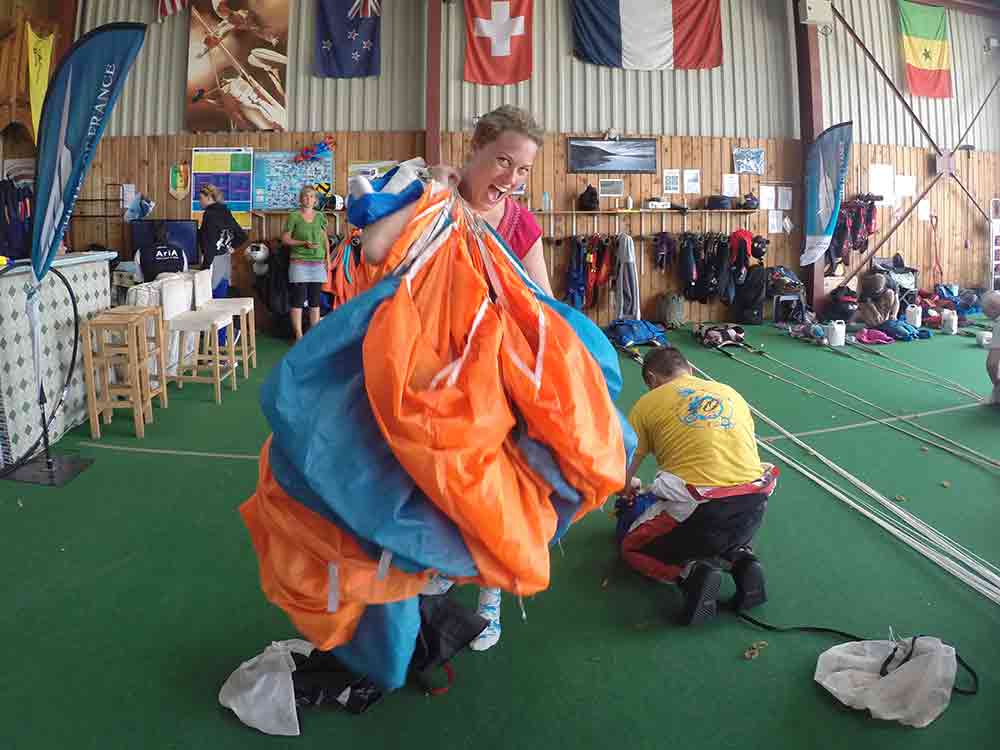
- Packing your own parachute
- All jumps from around 14,000 ft (about 4,200 m)
- Worldwide recognised skydiving certificate (AFF certificate)
- State-of-the-art equipment
Bonus
- Free solo jump after your exam jump
Prices at a glance
The amounts below are the course prices in France, excluding accommodation:
- 7 days AFF, 7 jumps, from €1.395 p.p.
- 14 days AFF Plus, 15 jumps, from €1.945 p.p.
- 14 days Airwareness, 25 jumps, from €2.695 p.p.
- 7 days Airboss Academy, 10 jumps, from €895 p.p.
In Morocco you work with complete packages that include training, accommodation, meals and local transport.
Current package prices can be found on the page skydiving in Morocco and in the blog How much does skydiving cost?.
Requirements for participation
Skydiving is physically and mentally demanding.
With these basic requirements we make sure everyone can take part in the course safely.
Age
From 18 up to 55 years old.
Weight
Maximum 100.
Medical requirements
You fill in a medical statement
and confirm that you are healthy enough to skydive.
If you are unsure, always check with your doctor first.
What will you learn during freefall training?
The parachute course starts on the ground.
In half a day you learn the basics: stable body position, altitude awareness, how to carry out emergency procedures and how to deploy your main parachute correctly.
We also practise flying and landing, so you start your first jump well prepared.
After that comes the part you are probably looking forward to the most: freefall.
Each jump has a clear goal and builds on what you did before.
First jump
Together with two instructors you climb to around 4,200 metres.
They stay with you throughout the whole freefall.
Freefall lasts about one minute.
You focus on staying stable, checking your altitude and deploying your parachute at the right moment.
All jumps are filmed for video debriefing.
Second jump
If the first jump went well, you go back up with one instructor.
The program looks similar to the first jump, but now the focus is on refining your skills.
Everything you discussed in the video debrief of your first jump goes into this one.
Third jump
On this jump you learn to turn 360 degrees left and right on your instructor’s signal.
We call this heading control and it gives you, for the first time, the real feeling that you are flying the freefall.
Fourth jump
Many participants say this is the most fun jump of the course.
On exit you make three forward somersaults and then continue working on your turns and control.
You notice that your body is starting to get used to freefall and that gives you calm and confidence.
Fifth jump
Your possibilities grow.
You learn to fly on your back and make different types of somersaults, both forwards and backwards.
You also work on tracking, moving forwards in freefall.
Sixth jump
This is your exam jump.
Everything you have learned comes together in one jump.
If you pass, you can start jumping solo and you receive your AFF certificate.
After that you make your free solo jump as the crown on your week.