




What does skydiving actually feel like?
What you really experience during your first jump
Last updated: March 17, 2026
The bottom line:
Many people think skydiving feels like falling. In reality, it feels more like the air is holding you. The first few seconds are intense, but after that, a sense of calm and focus often takes over. The moment the parachute opens and the release you feel after landing are also part of what makes a first jump so special.
- Almost everyone feels tension in the door of the aircraft. That is completely normal.
- For most people, skydiving does not feel like falling, but more like the air is carrying them.
- The first seconds are intense, then calm and focus often take over.
- The parachute opening and the emotional release after landing complete the experience.
The moment in the aircraft door
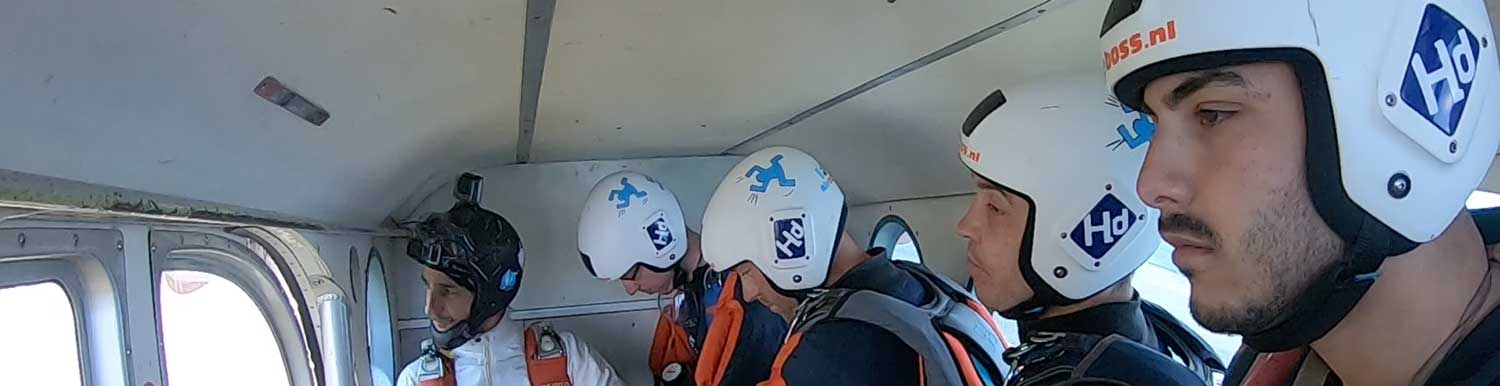
For many people, the real tension does not begin in freefall, but in the door of the aircraft.
Your heart rate goes up. Suddenly, your brain realizes that in a moment there will be no floor beneath your feet.
That makes sense. We are used to having solid ground beneath us. The moment you jump, that certainty disappears and all that remains is air.
Almost everyone feels tension there. That is not strange. It is completely normal.
Before you jump, a small mental shift has to happen. Your body wants to hold on to what feels familiar, while your mind has to accept that you are about to use the air instead of the ground.
Once that shift happens, you step out of the door and freefall begins.
The first seconds of freefall
Right after the jump, something interesting happens.
Many beginners start kicking their legs in the very first split second. Instinctively, the body is still searching for that familiar solid ground beneath the feet.
I see it in almost every course: in that first second the legs are still kicking, and one moment later someone is already lying calm and stable in the air.
That is a very normal response from the brain. Your system is basically saying: where did the ground go?
But almost immediately after that, the correct body position takes over. The airflow does its work and you notice that the air is actually supporting your body.
That is often the first moment when people are surprised by how stable the experience really feels.
Does skydiving feel like falling?
Many people expect the ground to rush up toward them.
In the skydiving world, we call that ground rush.
Beginners often think they will feel that right away, as if they are dropping straight down. But in reality, that usually is not what happens.
We jump from such a high altitude, usually around 4 kilometres, that the ground still feels far away. Because of that, freefall feels more like flying or floating than falling.
The airflow gives you stability and supports your body. That often makes the experience feel calmer than people expect beforehand.
For many people, that is one of the biggest surprises of their first jump.
Can you breathe while skydiving?
Yes, without any problem.
This is one of the questions beginners ask most often. Many people think the speed of the air will make it hard to breathe, but in practice that is almost never a problem.
At the altitude we jump from, there is still more than enough oxygen. It is mainly the combination of wind and tension that can make it feel a little different for a moment.
You can simply breathe during freefall. What does sometimes happen is that someone feels tense at first and forgets to breathe calmly.
As soon as you relax, you notice that you can simply look, feel, breathe, and take in what is happening.
Why does freefall feel so short?
After landing, many people say exactly the same thing:
“It was over so fast.”
And that is interesting, because a first freefall lasts about 55 seconds.
Just count to 55 while reading this article. That is actually quite a long time.
And yet, during a first jump it often feels as if time is gone in a blink.
That is because our awareness narrows temporarily during such an intense experience. Your full attention goes into the moment. That makes time seem to move faster.
During an intense experience like that, your brain processes a lot of input in a short time, which is why freefall often feels shorter afterwards than it really was.
That is simply how the brain works under pressure.
After a few jumps, that starts to change. You feel more control and become more aware of the time you have in the air. That often starts as early as jump two.
And the more control you feel, the stronger your sense of safety becomes as well.
What happens in your mind during skydiving?
A first jump often begins with tension, but in freefall that tension often changes into focus.
Your attention goes fully into the moment. Into the air, your body position, and what is happening right now.
That is exactly where many people experience an unexpected sense of calm.
That is because body and mind suddenly have to work together. Your body learns how it responds to the airflow, and your mind begins to realize that it does not need to fight the experience.
That is when things suddenly start to come together.
If you want to explore that side of it more deeply, you can also read our blog about the psychology of skydiving.
And that is often the moment when people discover they are capable of more than they thought.
What does it feel like when the parachute opens?
After the intensity of freefall, a completely different moment suddenly arrives.
The parachute opens, the speed drops away, and the noise of the wind is replaced by silence and calm.
That contrast is huge. First there is speed, focus, and air. Then suddenly you are hanging quietly under your parachute, looking down at the world below in complete peace.
Many people describe that moment as almost unreal.
Precisely because everything was so intense just before, that sudden stillness feels even more special.
What do you feel after landing?
After landing, the full reality of what you just did often only starts to sink in.
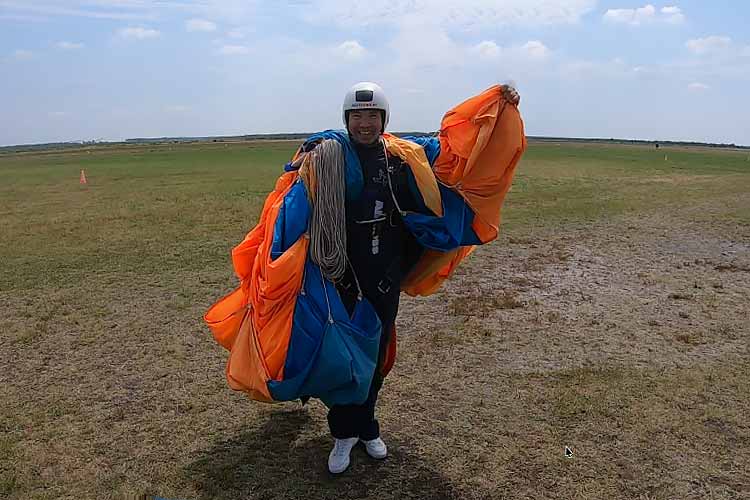
That is when you feel the release, the adrenaline, and often pure euphoria.
For many people, that is the moment when everything comes together. The tension beforehand, the intensity of freefall, the calm under the parachute, and then the realization: I actually did this.
That feeling often stays with you much longer than the jump itself.
Ready to experience it yourself?
In the end, you can never fully explain what skydiving feels like. You can describe it, approach it, and prepare for it, but at some point you simply have to experience it for yourself.
Would you like to get a better feel for freefall first in a controlled environment? Then our blog about indoor skydiving in a wind tunnel is a great next step.
If you do not just want to read what it feels like, but actually want to learn it step by step, then an AFF course with Airboss is the logical next step.
More skydiving inspiration
- ➔ Your first skydive: from hesitation to euphoria
- ➔ 5 misconceptions about skydiving: what beginners often expect incorrectly
- ➔ How to start skydiving: the first step toward your AFF course
On our homepage you will find all courses and destinations together.
“After a few seconds, the feeling of falling disappears. Then you discover that the air is carrying you.”