




Skydiving gear through the years
From round parachutes and silk to high-tech rigs, AADs, and modern canopies.
The bottom line:
Skydiving has become technically easier, but not because we’ve started taking the sport less seriously.
Quite the opposite. It’s become safer and more consistent because the gear has improved in layers: better fabrics, steerable parachutes, smarter container systems, better emergency procedure systems (like the 3-ring and reserve activation), and electronics that can step in as a last safety net.
If you learn to skydive with Airboss today, you’re jumping with equipment built on decades of testing, incident analysis, and pure innovation.
- From silk and round canopies to nylon and steerable ram-air canopies
- Breakthroughs like hand-deploy and the 3-ring system made emergency actions faster and more reliable
- AADs went from “almost nobody” to an almost standard safety net
- RSL and MARD systems can get your reserve out much faster after a cutaway
- Modern gear is about predictability, not gadgets
- What counts as skydive gear
- From silk to nylon
- From round to ram-air
- The rig: container, pilot chute, and the 3-ring system
- Reserve and AAD: the safety net
- RSL and MARD: under reserve faster
- Fabrics, lines, and performance
- Altimeters and data: measuring is learning
- What this means for you as a student
- Sources and further reading
What counts as skydive gear
When people say “parachute,” they usually mean only the fabric above your head.
In reality, your equipment is a system: harness and container (the rig), your main canopy, your reserve canopy, the controls (pilot chute, hand deploy, cutaway and reserve handle), and often an AAD as a last safety net.
So “gear” isn’t one thing, it’s a chain. And every link has become smarter over the past decades.
From silk to nylon
In the early days, silk was widely used. It was light and strong, but it depended on availability and quality.
During World War II, nylon emerged as an alternative and the shift toward large-scale, consistent production began.
There are well-known stories about early nylon test parachutes, and in military development you can see how nylon eventually became the standard.
The impact was huge: more scalability, better consistency, and less dependence on a single raw material.[1][2][3]
It sounds like a detail, but this is the beginning of modern gear thinking: predictability.
Not hoping your fabric is “roughly fine,” but knowing it’s right. You’ll see that mindset later in everything we now take for granted.
From round to ram-air
Round parachutes do one thing well: slow you down. They’re stable and simple, but steering is limited.
The real leap toward sport skydiving as we know it came with the idea of the ram-air parafoil:
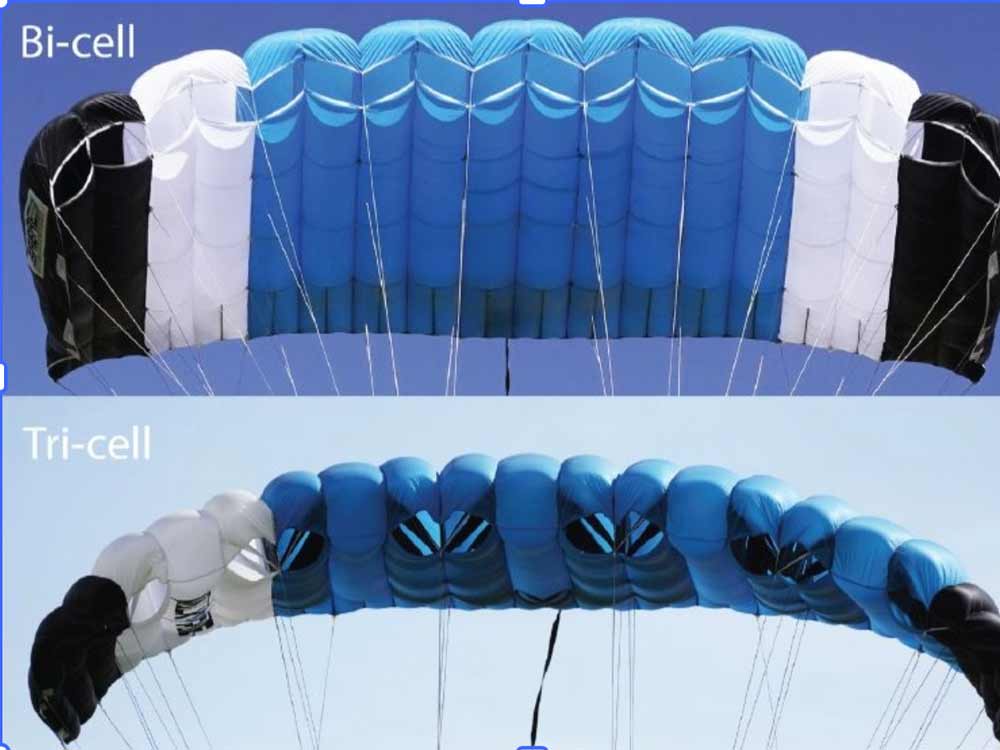
a canopy with cells that fills with air and becomes a kind of wing.
That idea was patented in the 1960s by Domina C. Jalbert and later became the foundation of the modern sport parachute.[4][5]
From that moment, everything changed. Landings became more precise. Flying patterns became normal.
And the learning curve improved, because you’re not just “hanging under a parachute,” you’re actively learning to fly.
The rig: container, pilot chute, and the 3-ring system
If you want to understand why skydiving can be trained so well today, look at two breakthroughs in the rig.
One is hand-deploy: throwing your own pilot chute instead of using an automatic static-line system.
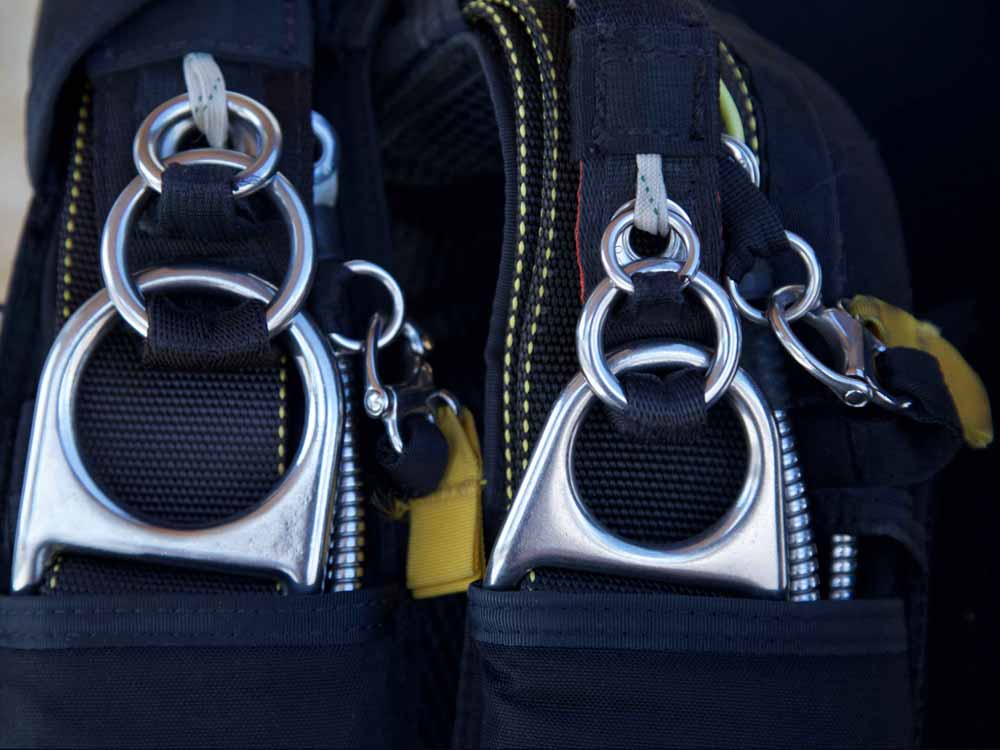
The second is the 3-ring release system, which made the cutaway process extremely reliable and force-efficient.[6]
What this means in practice: if your main isn’t right, you need to be able to act without fighting your own equipment.
The 3-ring system is built for stress actions: simple, consistent, and mechanically logical.
That design philosophy shows up everywhere in modern gear.
Reserve and AAD: the safety net
The reserve isn’t a “second main.” It’s a separate system, packed and checked separately, under strict rules.
And later an extra layer was added: the AAD (Automatic Activation Device).
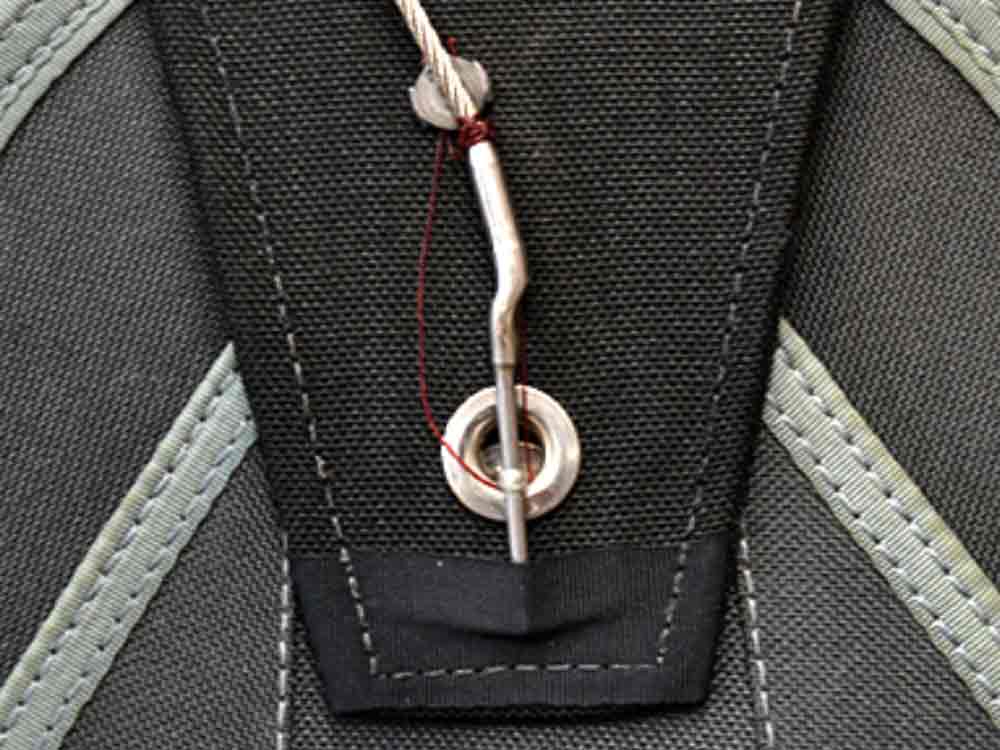
An AAD measures altitude and fall rate, and can activate the reserve if someone gets too low at too high a speed.
The FAA describes these systems as combining air-pressure measurement (altitude) and descent-rate measurement. That combination is exactly what matters.[7]
Around the early 1990s, adoption of AADs changed dramatically. With the introduction of CYPRES, it went from “almost nobody” to “almost everybody,” as reliability and trust increased.[8]
Important detail: an AAD doesn’t replace procedures. It’s a last safety net.
RSL and MARD: under reserve faster
After a cutaway, you want to save time. Systems were developed to speed up reserve deployment.
An RSL links your reserve to the release of your main, so the reserve starts faster after the cutaway.
A MARD goes one step further: it uses the departing main to help pull the reserve out faster.
A well-known example is the Skyhook, which developed this principle into an integrated system.[10]
The gain isn’t spectacle, it’s speed and a cleaner sequence.
Fabrics, lines, and performance
Beyond the big components, there’s been a quiet revolution in materials.
For canopies, you see the difference between more breathable fabrics and newer, less porous fabrics.
In sport parachutes, zero porosity (ZP) became a well-known concept, partly due to the development of ZP fabric in the 1980s and continued refinement afterward.[9]
That produced canopies that hold their shape and performance longer, as long as they’re used and maintained properly.
And then there are lines, sliders, and countless small improvements that add up to one big effect:
more predictability in opening, flight, and landing.
Altimeters and data: measuring is learning
At first, an altimeter was simply analog: a needle and that’s it. Then came audible warnings,
so you could still get a height check in freefall without looking.
Some sources place the first skydiving audible altimeter in the 1970s, which fits perfectly with the era when skydiving as a sport professionalized rapidly.[11]
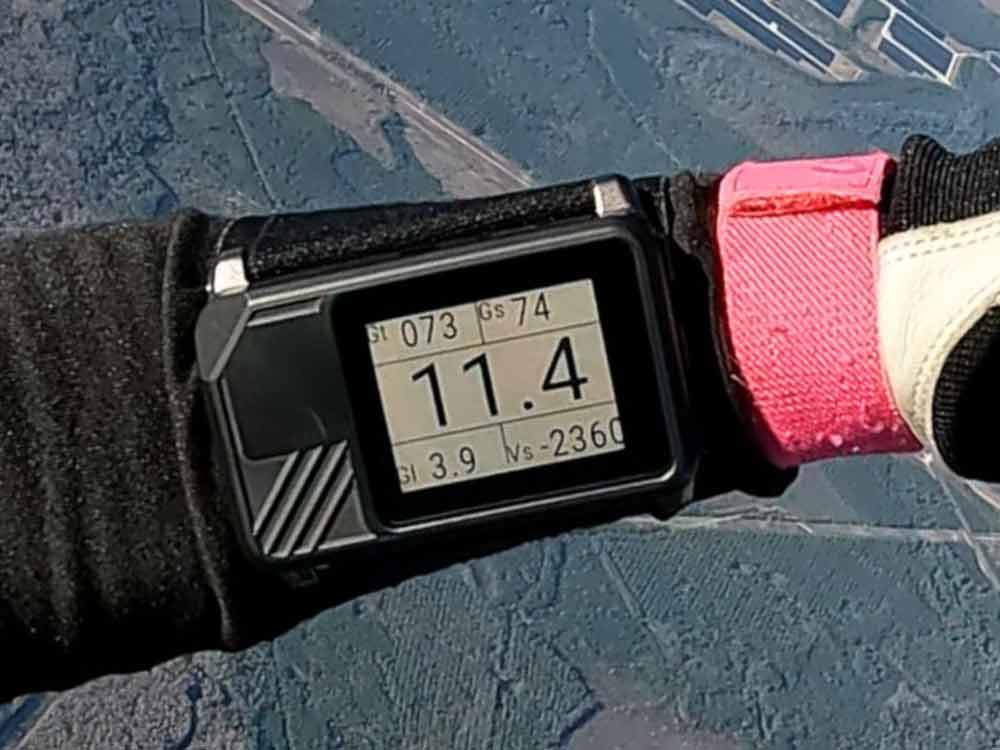
Today, measuring has become a learning tool: digital altimeters, logbooks, speed tracking.
Not to turn you into a nerd, but to shorten the feedback loop. Less guessing, faster learning.
What this means for you as a student
When you start with Airboss, you’re not jumping “old gear you just have to trust.”
You’re jumping systems designed specifically to help students learn safely:
clear procedures, clean handles, extra safety layers, and equipment engineered around predictability.
If you want to connect this to the real world, also read:
Is skydiving dangerous.
And if you want to start:
how to start skydiving.
Frequently asked questions about gear
Is an AAD mandatory
That depends on regulations and dropzone policy. Think of it as a last safety net, not a replacement for procedures.
Why does a rig have two handles
Because you train two actions: releasing a bad main (cutaway) and activating the reserve. Simple, recognizable, and consistent.
What’s the difference between RSL and MARD
RSL helps start your reserve after a cutaway. A MARD can use the departing main to pull the reserve out faster.
Should I buy my own gear immediately as a beginner
No. In a solid training program you jump with school gear, so you learn to skydive, not to shop.
More reading about learning to skydive safely
- ➔ Gear safety: how checks and quality build trust together.
- ➔ Is skydiving dangerous: about risk, perception, and what’s actually true.
- ➔ Misconceptions about skydiving: the myths you hear most often, and why they’re wrong.
Sources and further reading
- [1]Encyclopaedia Britannica: Parachute (history and development)
- [2]US Air Force Materiel Command: development of parachutes up to 1945 (silk and nylon)
- [3]Smithsonian Magazine: first nylon parachute test jump (1942)
- [4]International Skydiving Museum: Domina C. Jalbert and the Para-Foil (ram-air / multi-cell canopy)
- [5]Wikipedia: Domina C. Jalbert (background and context)
- [6]USPA: looking back on the evolution of sport gear (incl. piggyback rigs, throw-out pilot chute, 3-ring)
- [7]FAA Parachute Rigger Handbook: AAD explanation
- [8]Airtec CYPRES: adoption and role since the early 1990s
- [9]Performance Designs: Zero Porosity (ZP) fabric as a breakthrough
- [10]UPT: Skyhook RSL explanation (MARD principle)
- [11]ALTI-2: history and development of (skydiving) altimeters
Good gear doesn’t make skydiving “easy.” It makes it predictable, so you can learn safely under real pressure.